If you are opening or refreshing a shop, the fit-out is usually the biggest single cost after the lease itself. It is also the number that varies most wildly between quotes, which makes budgeting feel like guesswork. This guide sets out realistic 2026 ranges and, more importantly, explains what actually moves the price.
One honest caveat before the numbers: every unit is different. The state of the existing space, your brand spec and your opening deadline all matter more than any average. Treat the figures below as a starting point for a sensible conversation, not a quote.
Typical shop fit-out costs in 2026
UK retail fit-outs are usually priced per square metre. As a broad 2026 guide:
- Basic refresh (decoration, flooring, lighting tweaks): roughly £350 to £700 per m²
- Mid-range fit-out (new partitions, ceilings, joinery counters, electrics coordinated): roughly £700 to £1,500 per m²
- High-end or brand-standard fit-out (bespoke joinery, feature ceilings, premium finishes): £1,500 to £3,000+ per m²
What drives the price up
- The state of the unit. A stripped-back shell needs everything; a recently traded unit may only need cosmetic work.
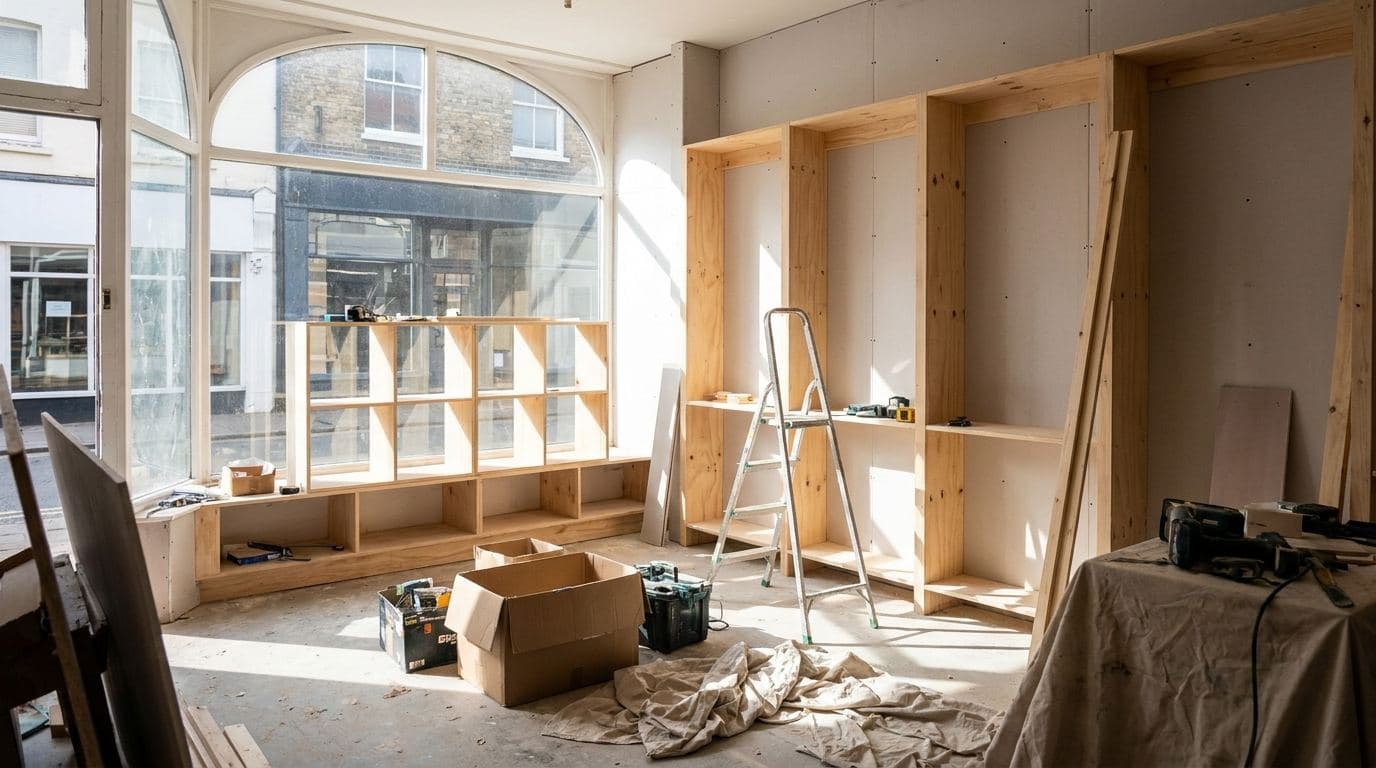
- Bespoke joinery. Made-to-measure counters, display units and shelving are the difference between a generic space and a brand experience, and they carry a manufacturing cost.
- Services. Moving electrics, adding kitchens or extract, or upgrading distribution boards adds coordinated trades and sign-offs.
- Working hours. Shopping centres and occupied parades often require night or weekend working, which raises labour costs.
- Programme pressure. A hard opening date compresses everything. Realistic lead time is cheaper than overtime.
Where you can safely save
Not every line item deserves the premium treatment. Spend where customers look and touch: the frontage, the counter, the lighting and the first three metres inside the door. Save on back-of-house areas, stock rooms and staff spaces, where a clean, durable finish is all you need.
The other reliable saving is coordination. When one contractor runs all the trades under a single programme, you avoid the gaps, re-visits and finger-pointing that quietly inflate multi-contractor projects.
How long does a shop fit out take?
Most single-unit retail fit-outs run from two to six weeks on site, plus lead time for joinery manufacture and any landlord or licensing approvals. A realistic programme agreed before work starts is the single best protection for your opening date.
Budgeting checklist before you sign anything
- Get an itemised quote, not a lump sum, so you can see and adjust each line.
- Confirm what the landlord requires (approvals, reinstatement obligations, working hours).
- Hold a contingency of around 10 to 15 percent for what the strip-out reveals.
- Agree milestone dates in writing, including joinery lead times.
- Check the contractor's insurance and references for comparable retail work.
Planning a project?
Get a free, itemised quote from Avex
Tell us about your project and we’ll come back with a considered approach and honest numbers. We reply within 1 working day.
Read more about our Shop Fitting in London service, or browse recent projects.
FAQ
Quick answers
- How much does a small shop fit out cost in the UK?
- For a typical small unit of 50 to 80 square metres, a mid-range fit-out usually lands between £40,000 and £90,000 in 2026, depending on the state of the unit and the level of bespoke joinery. A light cosmetic refresh can come in well under that.
- Can I fit out a shop while it stays open?
- Often, yes. Phased and out-of-hours working keeps a shop trading through a refurbishment. It adds some labour cost but protects your revenue, and for many established shops it is the right trade.